
Rida Fatima
A Raisin In the Sun showed 10th – 14th October 2023 at the ADC Theatre.
The title of A Raisin in the Sun is inspired by the Langston Hughes poem “Harlem”, and through the director’s artistic vision and the actors ardent portrayal of their characters, we can see why: the symbolism of hope and failure is threaded within the performance . A toxic yet tight knit relationship manifests in the form of a black family, the Youngers, who dream of a surer socio-economic future. Yet, it is their very passionate aspirations and eagerness that seems to burn them out, in the sunlight of an ambition which dehydrates the life from them. The script shows how the journey of dreams makes the family, at times, fruitful and ripe with opportunity. However, this is sometimes overshadowed by their delicate domestic relationships and youthful fragility which is exploited and spoiled. They wrinkle the longer they spend in the same sunlight which they wish to bask and grow in.
What I found riveting about this performance in particular was the agile dance between dark comedy and tense drama presented by the characters. Mama Lena (Rachael Oloyede-Oyeyemi) threw out her comedic lines at an amazing pace, with such an air of indignance and assurance that the audience could really appreciate the witty nature of the script. Her light asides and snappy digs balanced out the distress of the following emotionally intense scenes very well: from Ruth (Maya Moh)’s breakdowns over her relationship and planned abortion, to the shocking moments where the family discovers that Walter Lee (Tel Chiuri) has lost the rest of the insurance money.
Although most of the jokes were based on black, cultural comedy, it was great that this wasn’t the only type of humour available. Jokes varied from class, to sexuality, to identity too. In particular, Beneatha (Qawiiah Bisiriyu) and her curious desire for “expressing herself” was both hilarious and relatable. A medicine student, Beneatha embodied the typical ‘spiritually woke and politically robust” young adult character that most university students can relate to. This created a comedic light that balanced the ambiguity of identity with the hilarity of self-absorbed youthfulness.
For me, the most important issue that this play raises was the treatment of black women, with certain lines that rang in my mind throughout. For example:
“You tell a coloured woman about your dreams .. and she says your eggs are getting cold” – Walter Lee to Ruth
“He looked at the rug and then me and then back at rug” – Mama Lena about her husband, hinting at the idea her husband viewed her as as futile and redundant as the cheap rug.
Here, women, especially coloured women, are painted as the antagonists’ of a black man’s dream – they are demonised as the problem and the crushers of fantasies because it is their lack of ambition and strong-tongued disapproval which, Walter Lee feels, is the cause of his own personal failures and lack of self esteem.
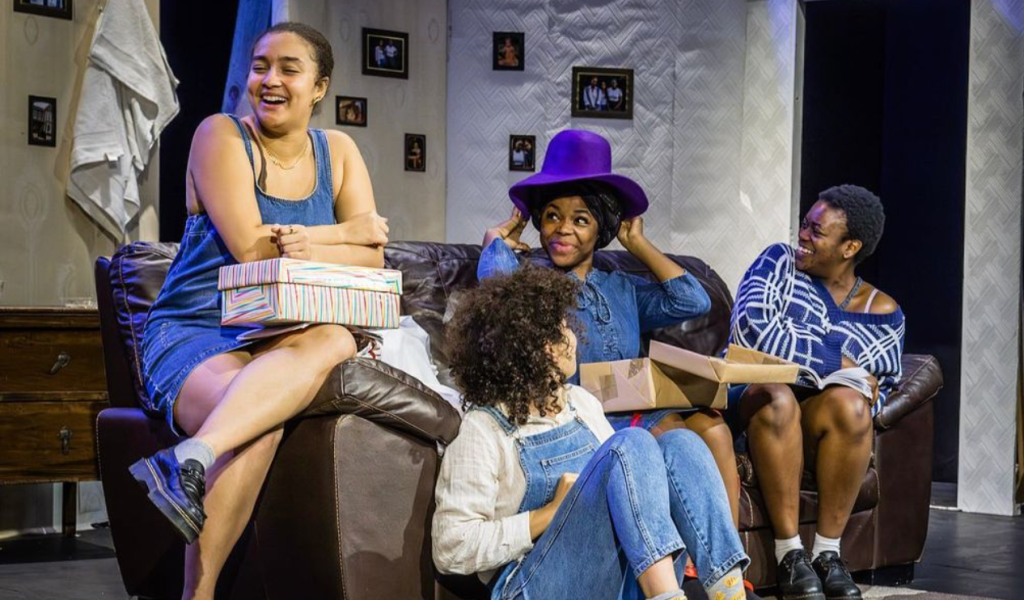
The original playwright Lorraine Hansbury hoped to explore this concept in order to confront the narrative that black women are loud-mouthed, finger pointing and culturally backwards compared to white women. This “Sapphire Caricature”, which dates back to the 1800s, is explored by Hansbury and well-executed by the A Raisin in the Sun’s director (Keziah Prescod) to show how the misogynistic men in the play project attributes of misery and down-spiritedness onto characters like Ruth who represents the unfair schtick black women get – even in their own homes.On this note, I loved how the cast was all female/non-binary coloured women, including the male characters.It almost felt like a statement that if this is a story about the ridicule of coloured women, it will be told and illustrated by them – taking back authority over their own narrative, in a sense.
Despite this, the biggest problem which weakened this play in my eyes is the fact it opens multiple sores and racially dug wounds without offering a discussion about any of them. Moh and Chiuri were both successful in showing the tug of war of Ruth and Walter’s failing and flawed relationship – as they yelled, cried and frantically fought over family values, money and more importantly, each other’s love. However, for this play, I think the characters and their problems were too underdeveloped for there to have been any proper reflection. The relationship between the husband and wife opens up discourse about the maltreatment of black women within their own race, as well as the triple shift women have to take on: motherhood, domestic duties and providing financial support for the home. Despite this, there is never a full moment where we see Walter Lee understand the weight of his words towards Ruth or Ruth even recognise her own worth beside being a wife. They only ever make up and experience marital tranquillity once they’re either financially secure or Walter gets what he wants.
I also loathe how the ‘pride’ of the Younger family and their sense of self is restored through Walter’s realisation that he doesn’t want to sell himself out to the unwelcoming white neighbours. The Younger family only receive a good ending because the one unreasonable man in the family has decided he wants to ‘come to his senses’ after humiliating his wife through the play, losing his mother’s insurance money and discouraging his sister from having ambition and goals. The ending isn’t a reflection of him stopping his former behaviour and treating the women around him better – instead it is a sloppy reconciliation of a son’s shame after calling his entire family a slur. I don’t think enough is said about anything in this play and Beneatha’s identity crisis seems like a distraction or sub-plot from the rest of the drama most of the time – or especially in this production.
The production also could’ve had the actors work on their accents to really make the speech flow better – the fluctuations in dialect were sometimes awkward. I’d also criticise the ending’s loud, explosive sounds and ambiguous orange lighting, which could’ve been clearer in meaning. As it was, it seemed like a quick way to introduce last minute danger and uncertainty in a very rushed sense.
However, ultimately, I would recommend watching this play purely because of its humorous scenes and also because of the intergenerational expression of the black female experience. The actors were well-immersed in their roles, from the childish and exuberant child to the snotty, own-race hating boyfriend. Because of the wide variety of roles presented to the audience, A Raisin in the Sun was exciting to watch.
Image Credits: Paul Ashley’s photograph of the cast of A Raisin in the Sun

 Cambridge Girl Talk