
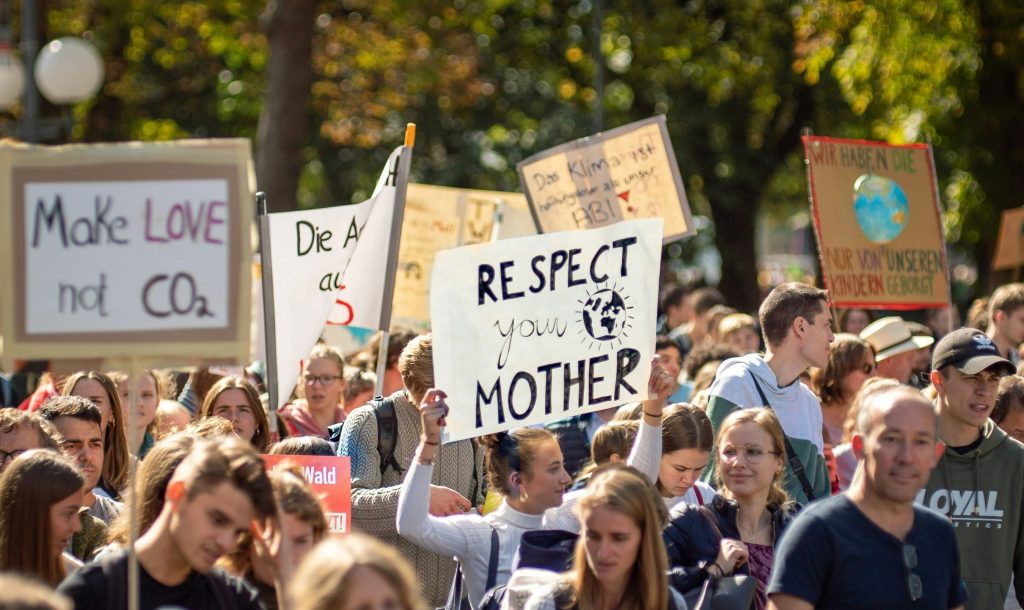
The eco gender gap is alive and has real-world consequences, says Eesha Singh
Eesha Singh
I have been vegetarian since I was about 15 years old. Like most vegetarians and vegans, my decision was made based on a documentary about the horrors of meat processing (chicken farming in my case). It is not something I consider to be a formidable achievement and was not a difficult transition for me – I never liked eating meat as a kid and my mum equally hated cooking it, so the rare times I did eat meat generally involved me eating dinosaur-shaped chicken nuggets with my brother.
When I got to university, I met more vegetarians and vegans than I ever have in my entire life. Perhaps it is because of my degree choice, History and Politics, and the fact that politically-minded young people tend to also be environmentally-minded people.
An even more curious thing I’ve noticed ever since I’ve been here is that every single vegan or vegetarian I know, bar one friend, is a woman.
This is not something I initially thought much of until I realised that the majority of my guy friends were generally politically and environmentally-minded people, so the choice not to become vegan or vegetarian made even less sense.
When pushed, I received a variety of reasons:‘I need to focus on my gains/protein goals’ (although one of my closest friends at university and one of the most athletic people I know, is a vegan and our college’s women’s rowing team’s captain) or ‘the last time I tried to go vegan, I got super ill’ (which reminded me of men’s general unwillingness to learn how to feed themselves properly).
This was a small focus group, so I decided to research the global levels of veganism and vegetarianism among both men and women. And my hunch was right. Not only are women more likely to have plant-based diets globally, they are also more likely to recycle, minimize waste, buy organic food and eco-labeled products, and save water and energy in the household, according to research done by the United Nations. In political terms, women are significantly more likely to be climate voters who name climate change or environmental issues as their top political priorities.
Once I had the stats, before I did the further academic research about the ‘why’, I tried to brainstorm the answer to that question myself. In doing so, I was led to another question: is being environmental a gendered character trait? Similar to the way in which a lot of things we would not expect to be gendered are gendered, like music taste and the sports you may play, is the choice to be vegan/vegetarian influenced by gender?
To give an example, let’s look at music taste. My younger brother, a 17 year-old going to an all-boys grammar school, told me that he would never dare to reveal to his friends that one of his top artists on Spotify is Laufey (for fear of being made fun of). Similarly, a male friend told me he was called ‘gay’ for liking Taylor Swift. In both cases, a seemingly mundane part of their identities – what music they like – becomes gendered. Liking a female singer, especially female singers known for slow-paced jazz pop and ‘girly’ pop respectively, becomes an opportunity to be made fun of by male peers and becomes a threat to their masculinity. Liking rap or hip-hop might be less ‘girly’ instead.
I wondered, is dietary choice and how environmentally-friendly someone is a similar situation? Is it less masculine to be green? I preferred this sociological explanation to one that would likely rely on stereotypes about women: women are more nurturing; women have more empathy; women have natural instincts to protect; and that is therefore why women care more about the environment.
To my surprise, the research backed up the sociological explanation. According to the Journal of Consumer Research, a series of seven studies provided evidence that the concepts of greenness and femininity are cognitively linked and showed that, accordingly, consumers who engage in green behaviors are stereotyped by others as more feminine and even perceive themselves as more feminine.
This is something businesses themselves are aware of too. Plastic Freedom and Package Free Shop, two popular zero-waste online retailers, say they are careful to use gender-neutral marketing, but both say about 90% of their customers are women.
It is sad but unsurprising to see that the decisions to go vegan/vegetarian, recycle and generally be environmentally friendly can be influenced not by climate justice, but by gender. Unfortunately for men, the stakes are a lot higher than it being ‘girly’ to be green. The UK is still recovering from the record heatwave in June that the entirety of Europe experienced, the widest and most intense ever recorded in Europe and estimated to have cost more than 20,000 lives. Scientists from the UN Climate Change Reports warn that crossing 1.5° C to 2° C threatens irreversible damage, such as the loss of warm-water coral reefs and the collapse of polar ice sheets.
The question now is if the next step is to find a way to make it masculine to be green or whether we as a society will be able to reject the idea that environmentalism should be a gendered issue at all.
Image credit: Mika Baumeister via Unsplash / Free to use under Unsplash


